Utilizing UX Research to Improve an the Space Center App
TL;DR
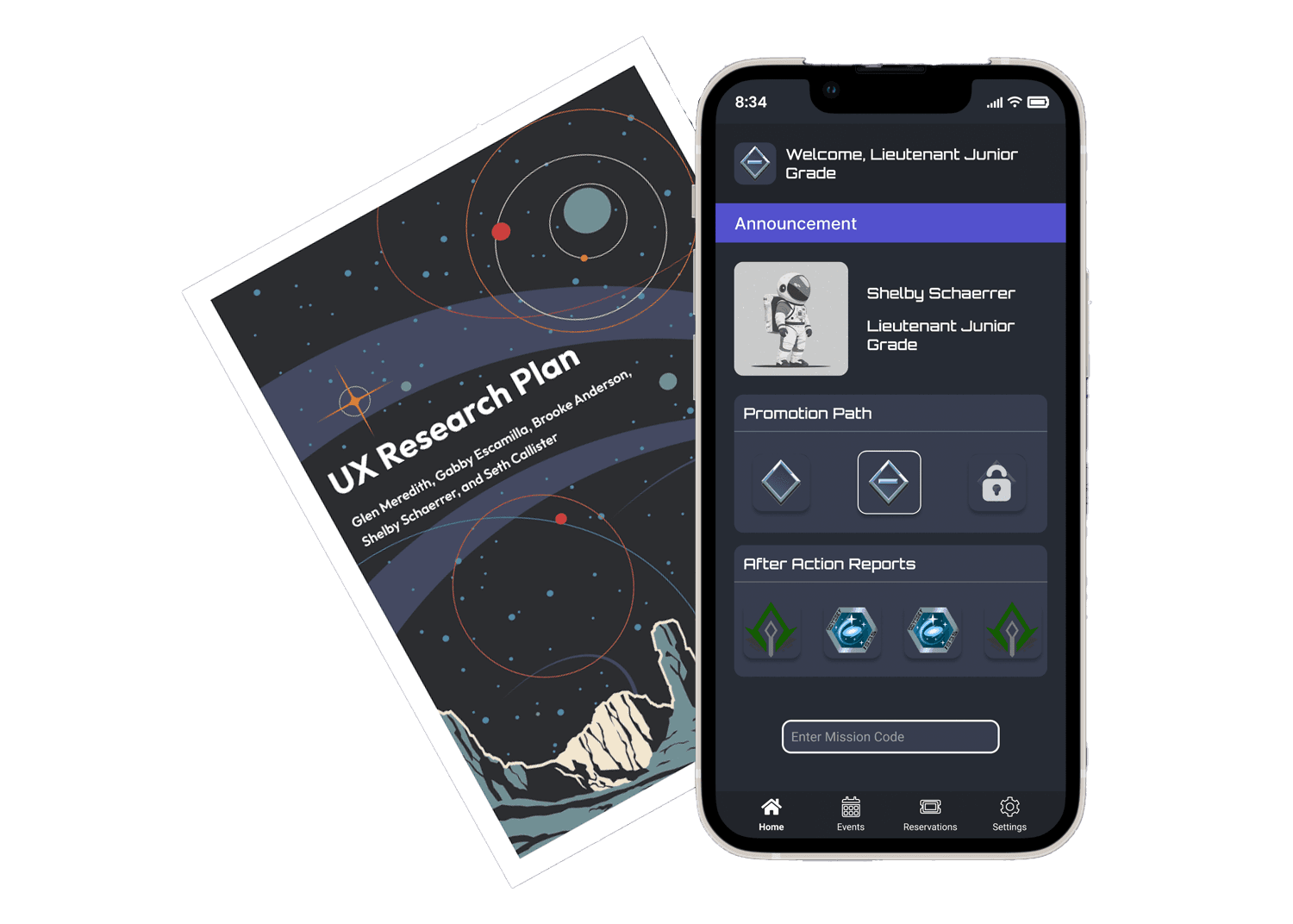
I was on a team of designers that conducted in-depth user research on behalf of the Christa McAuliffe Space Center which is an educational center that had started developing their own app in-house. Our research and suggestions helped them improve their app's usability while it was still in Beta, saving them a lot of time down the line.
Good Design Practices.
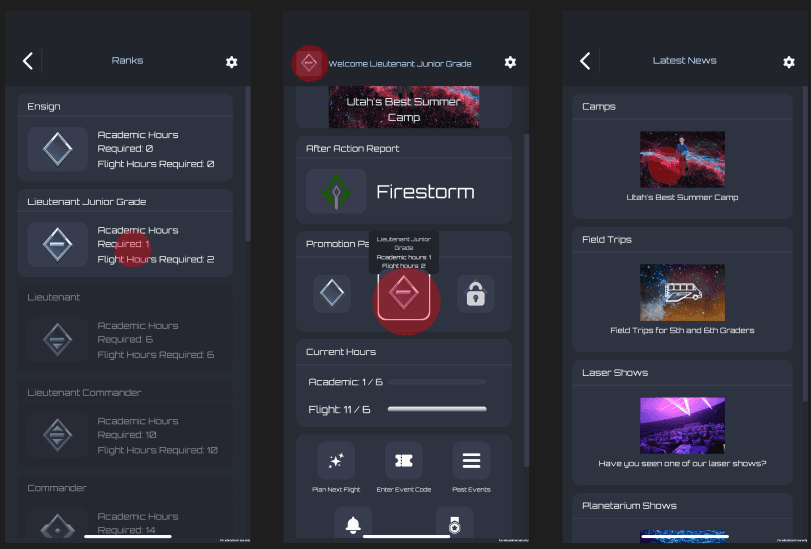
The first thing we did after getting access to the Beta version of the EdVenture app, was go through it as a team and see if there were any errors or pain points that we could identify from the get-go. The purpose of this heuristic evaluation was to identify what we were pretty sure would be a problem, so that we didn't waste time researching them. For example, we didn't need data to tell us that using 10pt font for the body text was going to be too small.
Instead, we wanted to find things that were unexpected and that would have a much larger impact on the user's experience long term.
The Survey.
After exploring the app ourselves, we wanted to talk directly to the Space Center's audience and find out what they would want/need from an app. Without having them look at the existing app, we could get their unbiased opinions on what would be the most meaningful to them in a hypothetical app.
Additionally, this allowed us to learn more about the general demographics of the audience as well as what devices they use. We discovered that most of them had iPhones, so if the app developer was going to prioritize one operating system over the other, it should be iOS.
Face-to-face Conversations.
Next, we interviewed a handful of the people that responded to the survey to really dig into their individual habits and needs as well as learning about their logic behind which features would mean the most to them.
At this phase we were particularly interested in what made people download an app. After all, it's a bit more of a commitment than simply visiting a website. We wanted to know what needs they wanted an app to fulfill, and what features would pique their interest.
We'd ask things like, "What was the last app you downloaded? Why did you download it?"

The First Prototype.
After learning more about who our audience is as well as what things about apps are important to them individually, we revised the original app design to implement this. We made requested features (such as mission logs) more prominent, and fixed the issues we uncovered during the initial heuristic markup.
It's important to note that this project isn't a full redesign, our goal was to increase usability and not necessarily to make it the most aesthetically pleasing app ever.
Putting Our Solution to the Test.
But we didn't stop at the first prototype. We wanted to make sure that the changes we made actually meant something, as well as make sure there weren't any issues we missed. So we conducted a full usability test on our prototype.
Overall, we had really good results. But before we could start celebrating, a concerning trend emerged. While it made perfect sense to us after working within the Space Center's specific jargon for weeks at that point, we confused people about what the difference between "Booking" and "Reservations". The former referring to "booking" a whole experience for a private group of people, and the latter meaning "reserving" a single spot at an event.
Clear as mud? Yeah, exactly.
So we changed it to "Events" and "Booking".

The Second Prototype.
After implementing the changes necessary after conducting the usability testing, we finalized our second prototype. It official represents all of the changes we recommend the Space Center should make to it's app before it's released.
Not shown here, we also sent a lengthy report to the Space Center full of each change we made, why we made it, and the data behind the decision. Hopefully it was helpful for them to have not only our recommendations, but our justifications backed by data direct from their audience.
However, they haven't released the app (as far as I can tell) so I'm unsure if any of the changes were implemented.
Our Final Captain's Log.
As a team, we're pretty proud of the thoroughness and quality of the research we did. But we agree that if we had more time we would've loved to work on the aesthetics of the UI as well, since the app doesn't quite do justice to how cool and immersive it is to stand in the Space Center itself.
But we learned a lot about in-depth user research, and space!

Utilizing UX Research to Improve an the Space Center App
TL;DR
I was on a team of designers that conducted in-depth user research on behalf of the Christa McAuliffe Space Center which is an educational center that had started developing their own app in-house. Our research and suggestions helped them improve their app's usability while it was still in Beta, saving them a lot of time down the line.
Good Design Practices.
The first thing we did after getting access to the Beta version of the EdVenture app, was go through it as a team and see if there were any errors or pain points that we could identify from the get-go. The purpose of this heuristic evaluation was to identify what we were pretty sure would be a problem, so that we didn't waste time researching them. For example, we didn't need data to tell us that using 10pt font for the body text was going to be too small.
Instead, we wanted to find things that were unexpected and that would have a much larger impact on the user's experience long term.
The Survey.
After exploring the app ourselves, we wanted to talk directly to the Space Center's audience and find out what they would want/need from an app. Without having them look at the existing app, we could get their unbiased opinions on what would be the most meaningful to them in a hypothetical app.
Additionally, this allowed us to learn more about the general demographics of the audience as well as what devices they use. We discovered that most of them had iPhones, so if the app developer was going to prioritize one operating system over the other, it should be iOS.
Face-to-face Conversations.
Next, we interviewed a handful of the people that responded to the survey to really dig into their individual habits and needs as well as learning about their logic behind which features would mean the most to them.
At this phase we were particularly interested in what made people download an app. After all, it's a bit more of a commitment than simply visiting a website. We wanted to know what needs they wanted an app to fulfill, and what features would pique their interest.
We'd ask things like, "What was the last app you downloaded? Why did you download it?"
The First Prototype.
After learning more about who our audience is as well as what things about apps are important to them individually, we revised the original app design to implement this. We made requested features (such as mission logs) more prominent, and fixed the issues we uncovered during the initial heuristic markup.
It's important to note that this project isn't a full redesign, our goal was to increase usability and not necessarily to make it the most aesthetically pleasing app ever.
Putting Our Solution to the Test.
But we didn't stop at the first prototype. We wanted to make sure that the changes we made actually meant something, as well as make sure there weren't any issues we missed. So we conducted a full usability test on our prototype.
Overall, we had really good results. But before we could start celebrating, a concerning trend emerged. While it made perfect sense to us after working within the Space Center's specific jargon for weeks at that point, we confused people about what the difference between "Booking" and "Reservations". The former referring to "booking" a whole experience for a private group of people, and the latter meaning "reserving" a single spot at an event.
Clear as mud? Yeah, exactly.
So we changed it to "Events" and "Booking".
The Second Prototype.
After implementing the changes necessary after conducting the usability testing, we finalized our second prototype. It official represents all of the changes we recommend the Space Center should make to it's app before it's released.
Not shown here, we also sent a lengthy report to the Space Center full of each change we made, why we made it, and the data behind the decision. Hopefully it was helpful for them to have not only our recommendations, but our justifications backed by data direct from their audience.
However, they haven't released the app (as far as I can tell) so I'm unsure if any of the changes were implemented.
Our Final Captain's Log.
As a team, we're pretty proud of the thoroughness and quality of the research we did. But we agree that if we had more time we would've loved to work on the aesthetics of the UI as well, since the app doesn't quite do justice to how cool and immersive it is to stand in the Space Center itself.
But we learned a lot about in-depth user research, and space!
Utilizing UX Research to Improve an the Space Center App
TL;DR
I was on a team of designers that conducted in-depth user research on behalf of the Christa McAuliffe Space Center which is an educational center that had started developing their own app in-house. Our research and suggestions helped them improve their app's usability while it was still in Beta, saving them a lot of time down the line.
Good Design Practices.
The first thing we did after getting access to the Beta version of the EdVenture app, was go through it as a team and see if there were any errors or pain points that we could identify from the get-go. The purpose of this heuristic evaluation was to identify what we were pretty sure would be a problem, so that we didn't waste time researching them. For example, we didn't need data to tell us that using 10pt font for the body text was going to be too small.
Instead, we wanted to find things that were unexpected and that would have a much larger impact on the user's experience long term.
The Survey.
After exploring the app ourselves, we wanted to talk directly to the Space Center's audience and find out what they would want/need from an app. Without having them look at the existing app, we could get their unbiased opinions on what would be the most meaningful to them in a hypothetical app.
Additionally, this allowed us to learn more about the general demographics of the audience as well as what devices they use. We discovered that most of them had iPhones, so if the app developer was going to prioritize one operating system over the other, it should be iOS.
Face-to-face Conversations.
Next, we interviewed a handful of the people that responded to the survey to really dig into their individual habits and needs as well as learning about their logic behind which features would mean the most to them.
At this phase we were particularly interested in what made people download an app. After all, it's a bit more of a commitment than simply visiting a website. We wanted to know what needs they wanted an app to fulfill, and what features would pique their interest.
We'd ask things like, "What was the last app you downloaded? Why did you download it?"
The First Prototype.
After learning more about who our audience is as well as what things about apps are important to them individually, we revised the original app design to implement this. We made requested features (such as mission logs) more prominent, and fixed the issues we uncovered during the initial heuristic markup.
It's important to note that this project isn't a full redesign, our goal was to increase usability and not necessarily to make it the most aesthetically pleasing app ever.
Putting Our Solution to the Test.
But we didn't stop at the first prototype. We wanted to make sure that the changes we made actually meant something, as well as make sure there weren't any issues we missed. So we conducted a full usability test on our prototype.
Overall, we had really good results. But before we could start celebrating, a concerning trend emerged. While it made perfect sense to us after working within the Space Center's specific jargon for weeks at that point, we confused people about what the difference between "Booking" and "Reservations". The former referring to "booking" a whole experience for a private group of people, and the latter meaning "reserving" a single spot at an event.
Clear as mud? Yeah, exactly.
So we changed it to "Events" and "Booking".
The Second Prototype.
After implementing the changes necessary after conducting the usability testing, we finalized our second prototype. It official represents all of the changes we recommend the Space Center should make to it's app before it's released.
Not shown here, we also sent a lengthy report to the Space Center full of each change we made, why we made it, and the data behind the decision. Hopefully it was helpful for them to have not only our recommendations, but our justifications backed by data direct from their audience.
However, they haven't released the app (as far as I can tell) so I'm unsure if any of the changes were implemented.
Our Final Captain's Log.
As a team, we're pretty proud of the thoroughness and quality of the research we did. But we agree that if we had more time we would've loved to work on the aesthetics of the UI as well, since the app doesn't quite do justice to how cool and immersive it is to stand in the Space Center itself.
But we learned a lot about in-depth user research, and space!